
What Is Cryptocurrency? A Complete Guide
Nowadays, cryptocurrencies are no longer just a curiosity — they have become a worldwide financial phenomenon. From Bitcoin and Ethereum to stablecoins like USDT and USDC, digital currencies are shaping the future of payments, investing, and even government finance. While many people still find them unusual or complex, banks, governments, fintech startups, and global corporations are already integrating blockchain technology into their operations.
In the near future, it will be almost impossible to find a major bank, a large accounting firm, a leading software company, or even a government that has not experimented with cryptocurrency or blockchain-based projects. From Web3 apps to CBDCs (Central Bank Digital Currencies), the adoption of digital assets is accelerating every year.
What Are Cryptocurrencies?
A cryptocurrency is essentially a digital currency created and secured by cryptography. It can be defined as a string of encrypted data that represents a unit of value, recorded and validated on a blockchain. Unlike traditional fiat currencies, cryptocurrencies are decentralised: they are not issued by a central bank or government, but exist through distributed networks maintained by computers worldwide.
Some of the most well-known cryptocurrencies include Bitcoin (BTC), Ethereum (ETH), Litecoin (LTC), and Ripple (XRP). Today, the crypto ecosystem also includes DeFi (decentralised finance) platforms, NFTs (non-fungible tokens), and thousands of altcoins serving specific purposes.
Unlike conventional money, which can be printed or manipulated by governments, cryptocurrencies are managed by code and peer-to-peer Internet protocols. Transactions are validated by network participants, not centralised authorities, which ensures transparency and independence.
How Are Cryptocurrencies Created?
Most cryptocurrencies are created through a process called mining — the act of adding transaction records to the public ledger of the blockchain. This ledger is maintained by a decentralised network of nodes. When you send a Bitcoin or Ethereum transaction, it is instantly broadcast to the network, awaiting confirmation. Once validated, the transaction becomes permanent and cannot be reversed or falsified.
Other cryptocurrencies, especially those based on Proof-of-Stake (PoS), are generated not by mining but through staking, where participants lock coins in wallets to support the network and earn rewards. This newer approach is more energy-efficient than traditional mining.
Revolutionary Features of Cryptocurrencies
Cryptocurrencies stand apart from traditional currencies due to their revolutionary properties. While conventional money depends on governments and central banks, crypto operates in a decentralised, borderless ecosystem. Here are the main features that make digital assets unique:
Decentralisation
No government, bank, or single institution can control the supply or manipulate transactions. Instead, cryptocurrencies run on open-source blockchain networks where rules are enforced by code.
Trust in Math, Not Politics
Unlike fiat currencies that rely on the trustworthiness of institutions, cryptocurrencies are secured by advanced cryptography and consensus algorithms. This makes them transparent and resistant to censorship or manipulation.
Immutable Databases
Unlike bank accounts or centralised ledgers, blockchain records cannot be altered retroactively. Once a transaction is confirmed, it becomes a permanent part of the chain.
Global Financial Alternative
For many people, especially in countries with inflation or weak banking systems, cryptocurrencies offer a real alternative to unstable local currencies. With Bitcoin and stablecoins, anyone can store and transfer value securely across borders.
These revolutionary characteristics explain why cryptocurrencies are increasingly seen as digital gold and a cornerstone of the emerging Web3 economy.
Transactional Features of Cryptocurrencies
One of the reasons why cryptocurrencies attract millions of users worldwide is their unique transactional features. Unlike traditional bank transfers or payment systems, crypto payments are faster, more secure, and borderless. These features make Bitcoin, Ethereum, and stablecoins an increasingly popular choice for individuals, businesses, and even governments.
Irreversibility
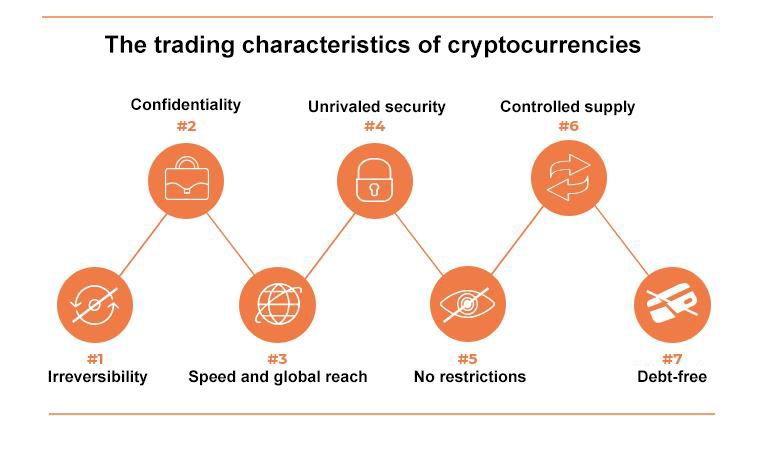
Transactions with cryptocurrencies are irreversible. Once a payment is confirmed and added to the blockchain, it cannot be undone — not by banks, not by governments, not even by the creators of the currency. This protects merchants from chargeback fraud, a common problem in traditional finance.
Privacy and Confidentiality
Crypto transactions are pseudonymous. They are not directly linked to real-world identities but to wallet addresses, which are long alphanumeric strings. While anyone can track the flow of funds on the blockchain, connecting addresses to actual individuals is difficult. Privacy-focused cryptocurrencies like Monero (XMR) or Zcash (ZEC) go even further, offering enhanced anonymity. Today, even Bitcoin is seeing innovations like the Lightning Network that improve both speed and privacy.
Speed of Transactions
Cryptocurrency transactions are generally processed within minutes, regardless of location. With technologies like the Lightning Network for Bitcoin and layer-2 solutions for Ethereum, payments can even become near-instant. Stablecoins like USDT and USDC allow almost real-time transfers at minimal cost, which is especially valuable for cross-border remittances.
Global Reach
Cryptocurrency operates on a worldwide network of decentralised computers. This means you can send or receive funds from anywhere in the world without worrying about exchange rates, banking hours, or international borders. For example, millions of migrant workers already use Bitcoin and stablecoins to send money home faster and cheaper than with banks.
Unmatched Security
Crypto wallets are secured by private keys, which only the wallet owner controls. This cryptographic protection makes it virtually impossible for outsiders to access your funds without authorisation. Blockchains like Bitcoin and Ethereum are secured by thousands of nodes worldwide, making them more resilient than centralised banking systems.
No Permissions or Restrictions
One of the most revolutionary features of cryptocurrency is that it is permissionless. Anyone can download a wallet app, create an address, and start sending or receiving crypto — no ID checks or bank approvals required. While governments are introducing CBDCs (Central Bank Digital Currencies) with heavy regulation, traditional cryptocurrencies like Bitcoin remain open and censorship-resistant.
Programmable Money
Beyond simple payments, cryptocurrencies such as Ethereum enable smart contracts — self-executing agreements coded directly on the blockchain. This opens the door to DeFi (Decentralised Finance), where users can borrow, lend, or earn interest without banks, as well as to NFT marketplaces, decentralised exchanges, and future Web3 applications.
These transactional features explain why cryptocurrencies are increasingly being used for everything from everyday payments to international remittances and investment opportunities. They are not just digital money — they are programmable, secure, and global financial tools.
Monetary Features of Cryptocurrencies
One of the reasons investors and economists are fascinated by cryptocurrencies is their unique monetary structure. Unlike fiat currencies, which central banks can print at will, most digital currencies have predictable, transparent, and often limited supplies. This makes them attractive not only for payments but also as a potential store of value and a hedge against inflation.
Controlled Supply
Traditional currencies like the US dollar or euro can be expanded indefinitely through central bank policies, leading to inflation. In contrast, many cryptocurrencies — especially Bitcoin — have a fixed or predictable supply schedule. For example, Bitcoin's maximum supply is capped at 21 million coins, and new issuance decreases every four years during events known as halvings. The last halving took place in 2024, reducing block rewards to 3.125 BTC per block. This controlled supply ensures scarcity, similar to precious metals like gold.
Other cryptocurrencies, such as Ethereum, use different models. With the introduction of EIP-1559 and its "burning" mechanism, a portion of transaction fees is permanently removed from circulation, making ETH potentially deflationary over time.
No Debt-Based Creation
Another key feature is that cryptocurrencies are not created as debt. Fiat currencies are typically issued through debt instruments such as government bonds, which central banks buy and sell to regulate the money supply. By contrast, when you own Bitcoin or Ethereum, you own the asset itself, not a promise of repayment. This gives cryptocurrencies a more direct and transparent monetary foundation.
Comparison with Stablecoins
While Bitcoin and many altcoins are scarce and volatile, stablecoins (like USDT, USDC, or DAI) are pegged to real-world currencies such as the US dollar. Their supply is also controlled but works differently: it expands or contracts depending on demand and the reserves held by the issuing companies. Stablecoins combine the speed and efficiency of crypto transactions with the price stability of fiat money, making them highly popular in 2026.
Predictability and Transparency
The supply of cryptocurrencies is not only limited but also publicly known. Anyone can look at the code and estimate how many coins will exist in the future. This level of transparency does not exist in traditional finance, where central banks can change policies suddenly. For example, the predictable issuance schedule of Bitcoin allows investors to plan long-term strategies around scarcity and halving cycles.
A New Monetary Model
By combining scarcity, transparency, and decentralisation, cryptocurrencies represent a new model of money. They can act as inflation hedges, digital commodities, or programmable assets in decentralised financial systems. In contrast to CBDCs (Central Bank Digital Currencies), which are controlled by governments, traditional cryptocurrencies like Bitcoin remain independent, making them attractive for those who value financial sovereignty.
In short, the monetary features of crypto — limited supply, non-debt creation, and predictable issuance — are what transform them from just digital tokens into potential global financial alternatives.
How Do Cryptocurrencies Work?
To understand the real power of cryptocurrencies, it's important to look at how they actually function. At their core, digital assets rely on blockchain technology — a decentralised public ledger that records and verifies every transaction. Instead of a central bank or authority, thousands of computers around the world maintain this ledger in sync.
Transactions and Wallets
When you send or receive crypto, the transaction happens between two wallets. Each wallet has two essential elements:
- Public key (address): Like your bank account number, it can be shared to receive funds.
- Private key: Like your password or signature — it proves ownership and must be kept secret. Whoever controls the private key controls the funds.
For example, if Alice sends 0.01 BTC to Bob, her wallet uses her private key to sign the transaction, and Bob's public address is used to receive it. The transaction is then broadcast to the network for validation.
The Role of Blockchain
Once broadcast, the transaction is grouped with others into a "block." These blocks are linked together chronologically, forming the blockchain. Every block contains:
- Details of recent transactions
- A reference (hash) to the previous block
- A unique cryptographic proof of work or stake
Because each block links to the one before it, altering past data is nearly impossible without rewriting the entire chain — one of the main reasons blockchain is considered so secure.
Consensus Mechanisms
Different cryptocurrencies use different ways of agreeing on which transactions are valid, known as consensus mechanisms:
- Proof-of-Work (PoW): Used by Bitcoin. Miners compete to solve complex puzzles to validate blocks. This ensures security but requires significant energy.
- Proof-of-Stake (PoS): Used by Ethereum and many newer blockchains. Validators lock coins (stake) to secure the network and are rewarded for honest behaviour. This is faster and more energy-efficient.
- Hybrid and Layer-2 solutions: Bitcoin's Lightning Network and Ethereum's Layer-2 protocols (Arbitrum, Optimism) make transactions cheaper and faster while keeping the main blockchain secure.
Transparency and Privacy
All confirmed transactions are visible on the public blockchain. This means anyone can track balances and transfers for any address, ensuring full transparency. At the same time, users remain pseudonymous, identified only by their wallet addresses unless they voluntarily reveal their identity.
Custody vs Non-Custody Wallets
In 2026, users can choose how to store their funds:
- Custodial wallets: Provided by exchanges (like Binance or Coinbase). Easier for beginners, but you rely on the platform's security.
- Non-custodial wallets: Apps like MetaMask or hardware wallets like Ledger, where you control your own private keys. "Not your keys, not your crypto."
Putting It All Together
In short, here's how a crypto transaction works:
- The user initiates a transfer from their wallet.
- The transaction is digitally signed with the private key.
- The network validates it using consensus rules.
- The transaction is added to a block, then to the blockchain.
- Funds arrive in the recipient's wallet.
This process happens within minutes (or seconds with Layer-2 solutions), making cryptocurrencies one of the fastest and most secure ways to transfer value globally.
History of Cryptocurrencies
The history of cryptocurrency is relatively short but full of milestones that have shaped today's financial landscape. Before Bitcoin, there were earlier attempts at creating digital money, such as DigiCash in the 1990s or e-gold in the early 2000s. However, these projects failed because they were centralised and vulnerable to shutdowns.
The Birth of Bitcoin
Everything changed in 2008, when a mysterious developer known as Satoshi Nakamoto published the famous whitepaper: "Bitcoin: A Peer-to-Peer Electronic Cash System." In January 2009, the first block of the Bitcoin blockchain — the Genesis Block — was mined, marking the start of the world's first decentralised cryptocurrency.
Satoshi's innovation solved a major problem that had plagued all previous digital currencies: the double-spending issue. In centralised systems, a trusted authority was needed to prevent the same money from being spent twice. Bitcoin eliminated this need by using a decentralised blockchain, where all participants collectively agreed on account balances and transactions.
Early Days (2009–2012)
- Bitcoin started as a niche project for tech enthusiasts and cryptographers.
- In 2010, the first real-world transaction took place: 10,000 BTC were spent on two pizzas — a story that became legendary as "Bitcoin Pizza Day."
- At first, Bitcoin was worth just a few cents, but by 2011 it had reached parity with the US dollar.
Expansion and Altcoins (2013–2016)
- Other cryptocurrencies like Litecoin and Ripple were created, offering faster transactions or alternative consensus models.
- By 2013, Bitcoin crossed $1,000 for the first time, attracting global attention.
- Governments and regulators began to notice crypto, with some embracing it and others banning or restricting its use.
The ICO Boom and Crypto Winter (2017–2019)
- In 2017, the launch of Ethereum revolutionised crypto by introducing smart contracts and decentralised applications.
- The same year saw the ICO (Initial Coin Offering) boom, where thousands of projects raised money by issuing tokens.
- Bitcoin hit nearly $20,000 in December 2017 but then crashed, leading to the long "crypto winter" of 2018–2019.
The Rise of DeFi, NFTs, and Institutional Adoption (2020–2022)
- The COVID-19 pandemic accelerated interest in digital money and contactless payments.
- DeFi (Decentralised Finance) exploded on Ethereum, enabling lending, borrowing, and trading without banks.
- NFTs gained mainstream popularity, turning digital art and collectables into billion-dollar markets.
- Institutions like Tesla, PayPal, and even banks started adopting crypto. Bitcoin reached an all-time high of $69,000 in 2021.
Regulation and Maturity (2023–2026)
- Governments worldwide increased focus on crypto regulation and launched their own CBDCs (Central Bank Digital Currencies).
- Bitcoin's 2024 halving once again reduced supply, renewing interest from long-term investors.
- In 2026, cryptocurrencies are no longer just an experiment — they are integrated into global finance, from Wall Street ETFs to everyday remittances.
The Legacy of Satoshi Nakamoto
Although the identity of Satoshi Nakamoto remains unknown, the impact of their invention is undeniable. Bitcoin proved that it is possible to create money without borders, governments, or central banks. Today, thousands of cryptocurrencies exist, but Bitcoin remains the symbol and foundation of the entire industry.
The story of cryptocurrency shows how a single idea — decentralised digital cash — grew into a multi-trillion-dollar global ecosystem. From pizza purchases to institutional adoption, the journey of crypto is one of the most fascinating chapters in modern financial history.
Most Common Cryptocurrencies in 2026
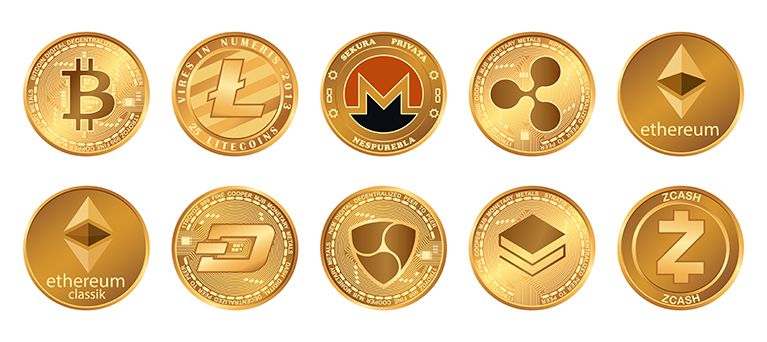
Since the creation of Bitcoin, thousands of digital currencies have appeared. Today, the number of cryptocurrencies exceeds 20,000, though only a few dozen are widely used and have strong communities and real adoption. Below are the most popular cryptocurrencies in 2026 that dominate trading, investing, and blockchain innovation.
Bitcoin (BTC)
The original and most valuable cryptocurrency. Bitcoin is often called "digital gold" because of its scarcity (21 million supply limit) and role as a store of value. Despite volatility, it remains the backbone of the crypto market, with institutional investors and even governments adding it to their reserves.
Ethereum (ETH)
The second-largest cryptocurrency, Ethereum, introduced smart contracts and enabled the rise of DeFi, NFTs, and Web3 applications. After switching to Proof-of-Stake, Ethereum became more energy-efficient and continues to be the main platform for decentralised apps (dApps).
Stablecoins (USDT, USDC, DAI)
Stablecoins are digital currencies pegged to fiat money, most commonly the US dollar. Tether (USDT) and USD Coin (USDC) dominate the market, while decentralised options like DAI are gaining popularity. Stablecoins are critical for trading, remittances, and DeFi because they combine crypto speed with fiat stability.
Solana (SOL)
Known as one of the fastest blockchains, Solana supports thousands of transactions per second with very low fees. It has become a hub for NFT marketplaces and DeFi platforms, making it a strong competitor to Ethereum in terms of scalability.
Cardano (ADA)
Created with a scientific approach, Cardano focuses on security, sustainability, and scalability. It is widely used in academic and government blockchain projects and continues to develop smart contract functionality.
Ripple (XRP)
Ripple is designed for fast cross-border payments. Despite facing regulatory battles, XRP remains one of the top cryptocurrencies for financial institutions thanks to its speed and low transaction costs.
Litecoin (LTC)
Often called "digital silver" compared to Bitcoin's "digital gold," Litecoin offers faster transaction confirmations and a higher maximum supply. It continues to be used as a testing ground for new blockchain features.
Bitcoin Cash (BCH) & Bitcoin Gold (BTG)
Both are forks of Bitcoin. Bitcoin Cash was created to allow larger block sizes and faster transactions, while Bitcoin Gold experimented with different mining algorithms. Although less dominant than BTC, they remain part of the crypto ecosystem.
Dash
Dash is built around privacy and speed. With features like InstantSend and PrivateSend, it offers fast, anonymous transactions, making it popular in regions with unstable banking systems.
Meme Coins (DOGE, SHIB, PEPE, TRUMP)
Dogecoin (DOGE) started as a joke but gained massive popularity thanks to community support and endorsements from Elon Musk. Shiba Inu (SHIB) followed as a "Dogecoin killer," while newer meme coins like PEPE and TRUMP Coin attract speculative investors. Though risky, meme coins remain a vibrant part of the market.
Other Notable Projects
- Avalanche (AVAX): A fast and scalable blockchain for DeFi and NFTs.
- Polkadot (DOT): Focused on interoperability between blockchains.
- Chainlink (LINK): Provides real-world data (oracles) to smart contracts.
- Tron (TRX):Popular in the entertainment and gaming industries.
- BXP Chip Coin: The first Mexican cryptocurrency, showing how local projects also join the global crypto movement.
Together, these top cryptocurrencies represent the diversity of the crypto ecosystem in 2026 — from payment coins and smart contract platforms to stablecoins, privacy coins, and meme coins. While new projects appear almost daily, only those with strong adoption and active communities are likely to survive long-term.

What Can You Do with Cryptocurrencies?
One of the most exciting things about cryptocurrencies is their versatility. They are not just speculative assets — they are real financial tools you can use in everyday life. In 2026, the use of cryptocurrency has expanded far beyond Bitcoin's original vision of peer-to-peer payments. From shopping online to earning yield in DeFi, here are the main ways people use crypto today.
Buy Goods and Services
You can use cryptocurrencies to buy products and services online and offline. Global companies, airlines, hotels, and even local coffee shops accept Bitcoin, Ethereum, and stablecoins as payment. Popular platforms like Shopify and PayPal already integrate crypto checkout options, and in some countries, you can even pay utility bills with Bitcoin.
Online and Offline Payments
- Travel: Book flights and hotels with Bitcoin, Ethereum, or USDT.
- Retail: From electronics to jewellery, many e-commerce stores accept crypto.
- Apps and Games: In-app purchases and subscriptions via tokens and stablecoins.
Investing
For millions of people, cryptocurrencies are primarily an investment opportunity. You can buy and hold Bitcoin, Ethereum, or other altcoins as part of your portfolio. Many long-term investors see Bitcoin as "digital gold", while others diversify into DeFi tokens, NFTs, or metaverse assets. Despite volatility, crypto remains one of the fastest-growing asset classes.
Trading
If you prefer short-term strategies, crypto offers endless opportunities for trading. Platforms like Binance, Coinbase, and Libertex allow you to trade dozens of pairs with leverage, CFDs, or spot trading. With 24/7 markets, crypto never sleeps.
Commercial and Business Payments
Businesses can accept crypto as easily as cash. Merchants use payment processors like BitPay or Coinbase Commerce to accept Bitcoin and stablecoins instantly. In some countries, companies even pay employee salaries in crypto.
ATM Withdrawals
Thousands of crypto ATMs worldwide allow you to buy or withdraw Bitcoin and other digital assets. For example, in Latin America, convenience stores such as 7-Eleven already support Bitcoin purchases.
Remittances
Crypto is transforming the remittances market. Migrant workers send money home instantly and cheaply with stablecoins, avoiding high bank fees and delays. This use case has become one of the strongest drivers of adoption in regions like Mexico, Nigeria, and the Philippines.
DeFi (Decentralised Finance)
With DeFi platforms, you can borrow, lend, or earn passive income by providing liquidity. Unlike traditional banks, DeFi runs on smart contracts and offers global access without paperwork. Examples include Aave, Uniswap, and Curve.
Staking and Yield
Instead of mining, many modern blockchains use staking. By locking coins such as Ethereum, Cardano, or Solana, you support the network and earn rewards. This has become one of the most popular ways to generate passive income with crypto.
NFTs and Gaming
Crypto is also used in NFT marketplaces and GameFi. You can buy unique digital art, in-game items, or virtual land in the metaverse. Platforms like OpenSea and Axie Infinity have turned NFTs into a multibillion-dollar market.
CBDCs vs Traditional Crypto
Governments are testing CBDCs (Central Bank Digital Currencies) for regulated digital payments. However, traditional cryptocurrencies remain attractive because they are decentralised and permissionless, offering freedom that CBDCs may lack.
In short, cryptocurrencies in 2026 can be used for payments, investments, remittances, DeFi, NFTs, and staking. They are becoming a full-fledged part of both the financial system and digital culture worldwide.
How to Obtain Cryptocurrencies?
There are many ways to get your first cryptocurrency. In 2026, the most common options include buying on exchanges, trading, mining, staking, and even earning through gaming or online rewards. Each method has its pros and cons, depending on how much risk, time, or technical knowledge you are willing to invest.
1. Buying on Exchanges
The simplest way to get crypto is to buy Bitcoin, Ethereum, or stablecoins directly on a cryptocurrency exchange such as Binance, Coinbase, or Kraken. After creating an account, you can deposit fiat money (USD, EUR, etc.) and purchase digital assets.
✔️ Pros: Easy access, instant ownership, variety of coins.
❌ Cons: Requires KYC verification, trading fees, and sometimes withdrawal limits.
2. Trading
If you don't want to own the coins directly, you can trade crypto CFDs (Contracts for Difference) on platforms like Libertex. Here, you speculate on price movements without storing crypto in a wallet. Trading allows leverage and fast entry into the market, but carries higher risks.
✔️ Pros: Quick start, no need for wallets, 24/7 markets.
❌ Cons: You don't own crypto, high risk if unmanaged.
3. Mining
Crypto mining means using computing power to validate blockchain transactions and earn rewards. Originally, mining was possible with personal computers, but now it requires specialised ASIC devices or participation in mining pools. Due to high electricity and hardware costs, individual mining is less profitable today, but still viable in certain regions.
✔️ Pros: You earn coins directly and support decentralisation.
❌ Cons: Expensive equipment, high energy usage, strong competition.
4. Staking
With the rise of Proof-of-Stake blockchains like Ethereum, Cardano, and Solana, you can now earn crypto through staking. By locking coins in a wallet, you help secure the network and receive rewards in return. This method is more eco-friendly than mining and popular in DeFi ecosystems.
✔️ Pros: Passive income, eco-friendly, easier than mining.
❌ Cons: Requires locking funds, risks if validators fail or get slashed.
5. DeFi and Yield Farming
Decentralised Finance (DeFi) offers new ways to obtain cryptocurrencies. By providing liquidity to platforms like Uniswap or Curve, users earn fees or tokens. This is known as yield farming or liquidity mining. While profitable, it requires knowledge of DeFi protocols and carries smart contract risks.
6. Airdrops and Rewards
Some projects distribute free tokens through airdrops to promote adoption. Others offer crypto rewards for completing simple tasks, using apps, or participating in governance. For example, many Web3 platforms reward users with native tokens for early participation.
7. Play-to-Earn (GameFi)
Blockchain gaming, or GameFi, allows players to earn tokens and NFTs by playing. Games like Axie Infinity or newer metaverse projects let users convert in-game rewards into real-world value.
Comparison of Methods
| Method | Pros | Cons |
| Buying | Simple, instant ownership, many options | KYC, fees, withdrawal limits |
| Trading | Quick entry, no wallet needed | No ownership, high risk with leverage |
| Mining | Earn directly an support network | Expensive hardware, high energy costs |
| Staking | Passive income, eco-friendly | Funds locked, validator risks |
| DeFi/Yield Farming | High returns, supports liquidity | Smart contract risks, complexity |
| Airdrops | Free tokens, easy to join | Uncertain value, often limited |
| Play-to-Earn | Fun + rewards, NFT integration | Volatile earnings, game risks |
In summary, there are many ways to obtain cryptocurrencies in 2026 — from traditional buying and trading to innovative methods like staking, DeFi, and play-to-earn gaming. The best choice depends on your goals: investment, passive income, or simply exploring the world of Web3.
The Bottomline: Pros and Cons of Getting Cryptocurrencies
Every method of obtaining cryptocurrencies comes with its advantages and risks. Whether you choose buying, trading, mining, staking, or DeFi, it's important to understand both sides before you start. Here's a clear breakdown of the pros and cons of cryptocurrency acquisition in 2026.
| Method | Pros | Cons |
| Buying |
|
|
| Trading (CFDs, spot, futures) |
|
|
| Mining |
|
|
| Staking |
|
|
| DeFi & Yield Farming |
|
|
| Airdrops & Rewards |
|
|
| GameFi / Play-to-Earn |
|
|
As shown, each method has different benefits and risks. Buying and staking are great for beginners and long-term investors, while trading, DeFi, and GameFi suit those who want higher (but riskier) opportunities. Mining is now less profitable for individuals, but still important for blockchain security.
Whichever path you choose, remember: cryptocurrency investing is never risk-free. Always research carefully, diversify your strategy, and never invest more than you can afford to lose.
Final Considerations: The Future of Cryptocurrencies
The future that once seemed like science fiction has already arrived. Cryptocurrencies are no longer just an experiment for tech enthusiasts, they are integrated into the global economy as a means of payment, investment, and innovation. From Bitcoin as digital gold to Ethereum powering DeFi and NFTs, crypto has proven its value as both a financial instrument and a technological breakthrough.
In 2026, the future of cryptocurrency looks promising but complex. On the one hand, institutional adoption is growing: Bitcoin ETFs are traded on Wall Street, banks are offering custody services, and even governments are experimenting with CBDCs. On the other hand, regulation is tightening, and investors must adapt to an evolving legal environment.
Why Cryptocurrencies Are Here to Stay
- Scarcity: Bitcoin's limited supply continues to attract investors seeking an inflation hedge.
- Innovation: DeFi, Web3, and NFTs create new markets beyond traditional finance.
- Global access: Crypto enables financial inclusion for millions without bank accounts.
- Institutional trust: Hedge funds, corporations, and even governments now hold crypto on their balance sheets.
Risks to Keep in Mind
- Volatility: Prices can change dramatically within hours.
- Regulation: Laws vary by country, and sudden restrictions may impact markets.
- Security: Hacks, scams, and phishing attacks remain a major threat.
- Technology risks: Bugs, forks, or failed projects can lead to losses.
Looking Ahead
The next decade will likely see crypto merging with traditional finance. Expect more tokenised assets, deeper integration with AI and IoT, and wider adoption of blockchain in supply chains, healthcare, and governments. At the same time, competition between CBDCs and traditional cryptocurrencies will shape the monetary system of the future.
For investors, crypto remains a high-risk, high-reward opportunity. The key is to diversify, manage risk carefully, and stay informed about both technological and regulatory developments.
Conclusion
Cryptocurrencies have moved from niche forums to mainstream finance, redefining how we think about money and digital ownership. Whether you are buying Bitcoin as a long-term investment, staking Ethereum, or exploring NFTs, one thing is clear: crypto is no longer the future — it is the present.
Not financial advice. The content of this article is provided by Libertex for general information and educational purposes only. It does not constitute investment advice, investment research, a personal recommendation, or an offer or solicitation to buy or sell any financial instrument or other asset. It is general in nature and is not tailored to any individual reader, so it cannot account for your personal circumstances, financial situation, knowledge, experience, or investment objectives. Any decision to act on this content is taken at your own discretion and risk, and you remain solely responsible for assessing whether a product or strategy is right for you and for seeking independent professional advice where appropriate.
Risk warning. Trading in financial instruments and other assets, particularly leveraged products such as CFDs, is complex and carries a high risk of losing money rapidly. Leverage magnifies both gains and losses, so small market movements can lead to disproportionate losses. The value of the assets referenced may rise or fall, and you may lose your entire invested amount. Past performance is not a reliable indicator of future results. The use of artificial intelligence, algorithms, automated strategies, or any other analytical tool in trading does not guarantee any particular outcome, does not eliminate risk, and does not replace your own judgement — you remain fully responsible for assessing every instrument, strategy, and decision, and for the results of your trading.
Why trade with Libertex?
- Get access to a demo account free of charge
- Receive live technical assistance 5 days a week, 24 hours a day
- Enjoy leverage of up to 1:500
- Use a platform for any device: Libertex and MetaTrader 4 and 5
- Pay zero commission on withdrawals in Latin America
- Benefit from up to $500 protection on your first trades with Negative Trade Protection