
How Many Bitcoins Are Left to Mine? The 2026 Complete Supply Guide
As of June 2026, approximately 957,000 Bitcoins remain to be mined out of the fixed 21 million supply, fewer than 5% of all BTC that will ever exist. The 20 millionth Bitcoin was mined on 9 March 2026 at block height 939,999. This guide covers the complete Bitcoin supply picture: remaining coins, daily issuance, permanently lost BTC, the halving schedule, and what happens when the last satoshi is issued around 2140.
Investors who wish to access CFD BTC through a platform can do so through Libertex, a user-friendly, award-winning Stock and CFD Broker operating since 2012, accepting clients from eligible jurisdictions.
The information in this article is provided for educational and informational purposes only and does not constitute investment advice or a personal recommendation. Trading in financial instruments involves risk.
Key Takeaways
- As of June 2026, approximately 957,000 BTC remain to be mined, under 5% of the 21 million hard cap.
- The 20 millionth Bitcoin was mined on 9 March 2026 at block height 939,999. Over 95.4% of all Bitcoin is already in circulation.
- At the current block reward of 3.125 BTC and 144 blocks per day, approximately 450 BTC are issued daily.
- An estimated 2.3–3.7 million BTC are permanently lost, reducing effective circulating supply to approximately 16–17.5 million BTC.
- The next Bitcoin halving is expected in April 2028, when the block reward drops from 3.125 BTC to 1.5625 BTC.
- The last satoshi is projected to be mined around the year 2140, approximately 114 years from now.
How Many Bitcoins Are Left to Mine Right Now?
As of June 2026, approximately 957,000 BTC remain to be mined, representing under 5% of Bitcoin's total fixed supply of 21 million coins. At the current issuance rate of approximately 450 BTC per day, this figure decreases daily. Real-time figures are available on blockchain explorers including Blockchain.com, Newhedge, and the Clark Moody Dashboard.
The sub-1-million milestone crossed in early 2026 carries psychological significance: for the first time in Bitcoin's history, fewer coins remain to be issued than are already estimated to be permanently lost.
| Metric | Value | Source |
| Total Hard Cap | 21,000,000 BTC | Bitcoin Protocol |
| Already Mined | 20,043,290+ BTC | Newhedge / Blockchain.com |
| Remaining to Mine | ~957,000 BTC | Newhedge, June 2026 |
| % of Supply Issued | 95.4%+ | Clark Moody Dashboard |
| Current Daily Issuance | ~450 BTC/day | 144 blocks × 3.125 BTC |
| Estimated Final BTC | ~2140 | Bitcoin Protocol math |
Source: Blockchain
Bitcoin's 21 Million Hard Cap: The Rule That Changes Everything
Central banks have added trillions of units to fiat money supplies over the past decade with no statutory ceiling. Bitcoin's maximum supply of exactly 21 million coins is hardcoded into the Bitcoin Protocol and enforced by every node running the network globally. No individual, government, or institution can override it.
Satoshi Nakamoto encoded this limit as a deliberate design choice: to create a form of money with absolute, independently verifiable scarcity. Each of the 21 million BTC is divisible into 100,000,000 satoshis, placing the total number of spendable units at approximately 2.1 quadrillion. That's sufficient for micro-transactions at scale without requiring any increase in the coin supply.
The code is the policy. Unlike monetary policy decisions made by committees and subject to revision, Bitcoin's supply schedule is mathematical. It runs the same way on every node, everywhere, all the time.
Why Exactly 21 Million? The Math Behind the Number
The 21 million figure emerges from a geometric series built into the Bitcoin Protocol. Mining began with a block reward of 50 BTC. Every 210,000 blocks — approximately four years — that reward is cut in half. The sum of this infinite halving series converges mathematically to approximately 21 million:
50 + 25 + 12.5 + 6.25 + 3.125 + … ≈ 21,000,000 BTC
Satoshi Nakamoto never provided a definitive public explanation for choosing the precise figure. The mathematical elegance of the geometric series, however, produces a supply schedule that is both finite and asymptotically approached, technically never reaching exactly 21 million due to satoshi-level rounding at each halving epoch.
Can the 21 Million Cap Ever Be Changed?
Technically, Bitcoin's open-source code can be modified by anyone. Practically, altering the supply cap would require overwhelming consensus from developers, miners, and node operators worldwide, and would almost certainly trigger a contentious hard fork, splitting the network into two competing chains.
The 2015–2017 block size wars provide a concrete historical illustration. A proposal to increase Bitcoin's block size — a far less consequential change than altering the supply cap — produced years of conflict, a hard fork (Bitcoin Cash), and ultimately failed to change the main Bitcoin protocol. Any proposal to raise the 21 million limit would face orders of magnitude greater resistance, as it would directly devalue every existing holder's coins.
For all practical purposes, the 21 million cap is immutable. The code is the policy.
How Many Bitcoins Have Already Been Mined?
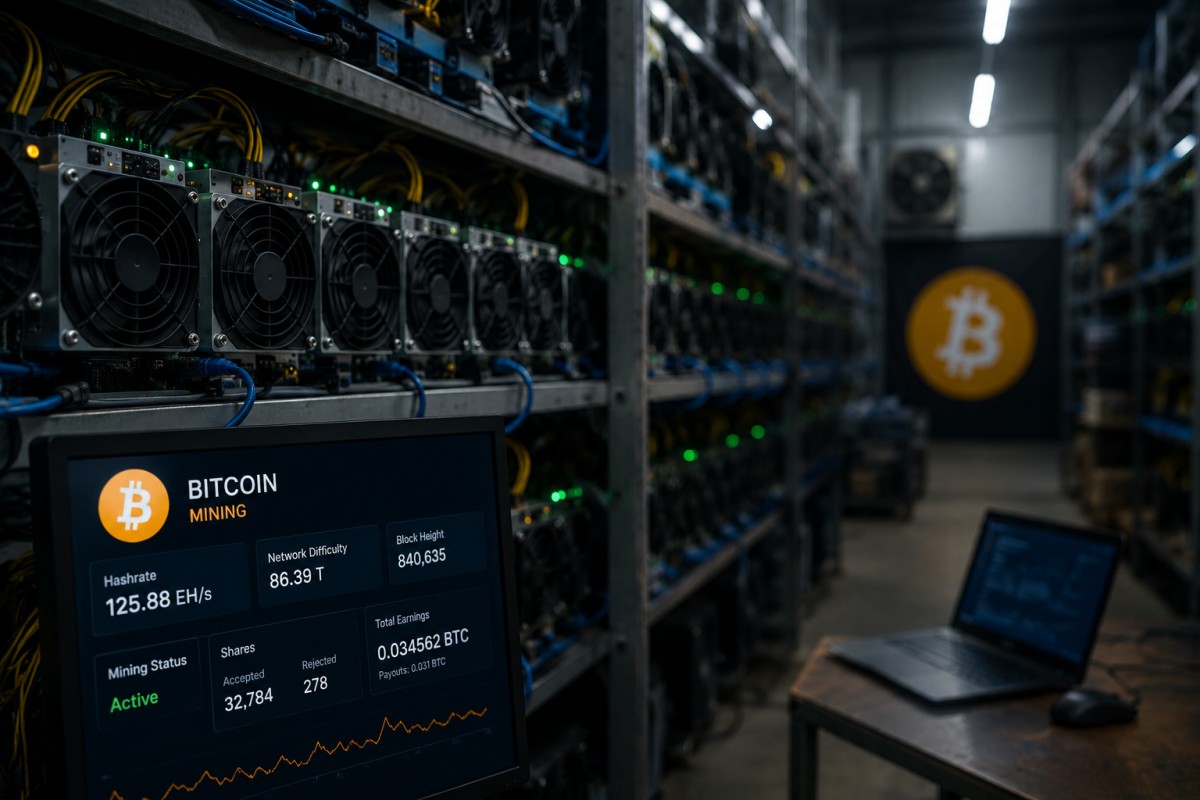
As of June 2026, over 20,043,000 BTC have been mined, representing more than 95.4% of Bitcoin's total supply. The 20 millionth coin crossed the supply threshold on 9 March 2026 at block height 939,999, a milestone noted by CoinDesk and confirmed on the Clark Moody Dashboard. The asymmetry of what remains is striking: that final 4.6% will take over 114 years to distribute.
Bitcoin Supply Issued: 95.4% of 21,000,000 BTC
Source: The Block
What Is Circulating Supply and How Is It Measured?
Circulating supply refers to the total number of Bitcoins that have been mined and are theoretically available for transaction. Blockchain explorers count all spendable UTXOs (unspent transaction outputs) in real time. Any node can independently verify the figure.
Circulating Supply: All BTC mined to date (~20,043,000 BTC).
Effective Supply: Circulating supply minus permanently lost BTC (~16–17.5 million BTC).
Standard circulating supply figures cannot filter out lost coins that are indistinguishable from dormant-but-active wallets on-chain. The gap between circulating supply and effective supply is therefore an estimate, not a certainty, but the directional argument is structurally sound.
How Many Bitcoin Blocks Are There Today?
As of June 2026, the Bitcoin blockchain has surpassed block height 860,000. Each block adds 3.125 BTC to circulating supply, providing an independent verification method: block height multiplied by the current reward approximates total issuance. Block height updates approximately every 10 minutes on any blockchain explorer.
How Many New Bitcoins Are Mined Each Day?
The current daily Bitcoin issuance rate follows directly from the protocol's block schedule. The arithmetic is explicit and independently verifiable:
- Blocks per hour: 6 (one block approximately every 10 minutes)
- Blocks per day: 6 × 24 = 144 blocks
- Current block reward: 3.125 BTC (set by the April 2024 halving)
- New BTC per day: 144 × 3.125 = ~450 BTC/day
- New BTC per year: 450 × 365 = ~164,250 BTC/year
- Bitcoin's current annual inflation rate: ~0.85%, already below gold's ~1.5–2%
- After the April 2028 halving: ~225 BTC/day, annual inflation rate falls to ~0.4%
No monetary asset in recorded history has reached a level of predictable, programmatically enforced scarcity below 1% annual inflation while remaining in active circulation.
How the Bitcoin Halving Controls New Supply
Every 210,000 blocks — approximately every four years — the Bitcoin Protocol automatically cuts the block reward in half. This event, known as the halving, is not a policy decision subject to discretion. It is a mathematical inevitability encoded in Bitcoin's code, enforced by every node on the network.
| Halving Event | Year | Block Reward | Daily Issuance |
| Genesis | 2009 | 50 BTC | 7,200 BTC |
| 1st Halving | Nov 2012 | 25 BTC | 3,600 BTC |
| 2nd Halving | Jul 2016 | 12.5 BTC | 1,800 BTC |
| 3rd Halving | May 2020 | 6.25 BTC | 900 BTC |
| 4th Halving ✓ Current | Apr 2024 | 3.125 BTC | 450 BTC |
| 5th Halving (est.) | Apr 2028 | 1.5625 BTC | 225 BTC |
| 6th Halving (est.) | ~2032 | 0.78125 BTC | ~113 BTC |
Source: Bitcoin
How Many Bitcoins Will Be Mined Before the Next Halving?
The 5th halving is estimated to occur in April 2028 at block 1,050,000. As of June 2026, approximately 189,000–210,000 BTC remain to be issued before that event, calculated by subtracting the current block height from 1,050,000 and multiplying by 3.125 BTC per block. After the 2028 halving, daily issuance drops from ~450 BTC to ~225 BTC, another material supply compression event.
BTC remaining until next halving: ~189,000–210,000 BTC | Estimated halving date: April 2028 | Post-halving daily issuance: ~225 BTC/day
Bitcoin Halving Price Effect
Historical data shows a consistent two-phase pattern around Bitcoin halvings: a pre-halving accumulation phase, in which prices often trend higher in the 6–12 months before the event, followed by a post-halving lag phase, in which the largest price appreciation has historically arrived 6–18 months after the halving.
| Halving | Date | Pre-Halving Price | 12-Month Post-Halving Peak |
| 1st | Nov 2012 | ~$12 | ~$1,000+ (+8,233%) |
| 2nd | Jul 2016 | ~$650 | ~$2,526 (+289%) |
| 3rd | May 2020 | ~$8,727 | ~$55,847 (+540%) |
| 4th | Apr 2024 | ~$63,800 | Trajectory ongoing as of June 2026 |
Source: CoinMarketCap
Past price patterns do not constitute a guarantee of future performance. Broader macroeconomic conditions — interest rates, regulatory developments, institutional flows — interact with the halving supply effect and may amplify or dampen the historical pattern.
Why Bitcoin Mining Gets Progressively Harder Over Time
Every 2,016 blocks — approximately every two weeks — the Bitcoin Protocol recalibrates mining difficulty to maintain the ~10-minute average block interval, regardless of how much computing power has been added to or removed from the network. This self-regulating mechanism ensures issuance remains on schedule independently of hashrate changes.
Bitcoin's network hashrate reached a record monthly average of 1,082 EH/s in October 2025, the highest sustained hashrate ever recorded for a proof-of-work network.
As hashrate rises and block rewards shrink, the cost to mine each successive BTC increases. This dynamic structurally favours those who already hold Bitcoin over those attempting to produce it. Platforms such as MetaTrader 5 provide analytical tools for monitoring Bitcoin price action and network metrics in real time.
The True Available Supply: How Many Bitcoins Are Actually Lost Forever?

The 21 million cap tells one story. The effective supply tells a more consequential one. Ledger's 2025 analysis estimates that between 2.3 and 3.7 million BTC are permanently inaccessible; independent estimates from Chainalysis place the range similarly, while some analyses suggest figures closer to 5 million. If the midpoint estimate of ~3 million BTC is accurate, the true usable supply sits at approximately 16–17 million coins, not 20 million.
The six primary causes of permanent Bitcoin loss:
- Lost or forgotten private keys: The most common cause; no private key means no access, ever.
- Lost or destroyed storage devices: Hard drives, USB drives, and paper wallets physically lost or damaged.
- Forgotten passwords or seed phrases: Particularly common among early adopters who did not anticipate Bitcoin's future value.
- Death of owners without inheritance planning: BTC held in self-custody with no documented recovery path.
- Early miner dormancy (including Satoshi's estimated holdings): Coins mined in 2009–2010 that have never moved.
- Intentional burning to unspendable addresses: Coins sent to provably unspendable addresses, permanently removing them from supply.
Source: Ledger Academy
Why Lost Bitcoins Matter More Than Most People Realize
The circulating supply is ~20 million. The effective supply is closer to 16–17 million. That gap is the real scarcity story.
The economic logic is direct: if demand for Bitcoin grows while effective supply permanently contracts, the price per accessible coin must absorb that pressure. The exact lost-coin figure is an estimate derived from on-chain analysis of dormant UTXOs. On-chain data cannot perfectly distinguish lost coins from dormant-but-active wallets. However, the directional argument is structurally sound regardless of the precise estimate.
How Many Bitcoins Does Satoshi Have?
The dominant estimate, based on Sergio Demian Lerner's nonce-pattern analysis, places Satoshi Nakamoto's holdings at approximately 1 million BTC, accumulated primarily during Bitcoin's first year of existence. A counter-analysis disputes the methodology, suggesting a lower figure closer to 300,000 BTC. Both estimates agree on the critical fact: none of these coins have moved since approximately 2011.
Satoshi's estimated holdings: 300,000 BTC (lower estimate) to ~1,000,000 BTC (Lerner analysis)
Last known movement: ~2011
Share of total cap: 1.4%–4.8%
Regardless of which estimate is more accurate, Satoshi's dormant holdings represent one of the single largest contributors to the lost-coin figure, and have not introduced a single coin to circulating supply in over a decade.
How Many Bitcoins Have Been Stolen?
Stolen Bitcoin is structurally distinct from lost Bitcoin. Stolen coins may still circulate. They changed hands without authorisation but are not permanently inaccessible. They do not reduce effective supply in the same way lost private keys do.
| Exchange | BTC Stolen | BTC Recovered | Status |
| Mt. Gox | ~850,000 BTC | ~650,000 BTC | Partial recovery; creditor repayments ongoing in 2024 |
| Bitfinex | ~120,000 BTC | ~94,000 BTC | Recovered by US DOJ in 2022; partial restitution |
Source: CoinDesk
When Will the Last Bitcoin Be Mined?
The last satoshi is projected to be mined around the year 2140, approximately 114 years from now. This is not an estimate based on current hardware or market conditions. It is a mathematical outcome of the halving schedule embedded in Bitcoin's protocol, assuming the ~10-minute average block interval holds over time.
The asymptotic nature of remaining issuance is the key insight: 99% of all Bitcoin will be mined by approximately January 2035, i.e., within the next decade. The remaining 1% then takes over a century to distribute.
- 2026: ~95.4% mined; ~957,000 BTC remaining
- April 2028: 5th halving; block reward drops to 1.5625 BTC/block; daily issuance ~225 BTC
- ~2032: 6th halving; ~98.4% mined
- ~January 2035: 99% of total supply mined; ~210,000 BTC remaining
- ~2040: ~99.5% mined
- ~2140: 100% mined; final satoshi issued at block ~6,929,999
Source: CoinDesk
What Will the Block Subsidy Be Before Going to Zero?
29 halvings remaining | Final block reward: 0.000000011641532 BTC | Estimated completion: ~2140
Bitcoin's supply technically approaches — but never precisely reaches — exactly 21 million BTC due to satoshi-level rounding at each halving epoch. Twenty-nine further halving events remain before the block reward reaches an effectively zero value of 0.000000011641532 BTC per block. The current reward of 3.125 BTC per block serves as the reference anchor for all supply projections through April 2028.
Bitcoin Supply in 2026 and Beyond: Milestone Projections
The near-term supply milestone is more striking than the 2140 endpoint: by approximately January 2035 — fewer than nine years away — 99% of all Bitcoin that will ever exist will already be in circulation. The issuance window is quietly closing. The April 2028 halving represents the next major supply compression event, cutting daily new supply from 450 BTC to 225 BTC.
What Happens to Bitcoin Miners After All 21 Million Are Mined?
Once all 21 million BTC are issued, block subsidies drop to zero. Miners transition to compensation exclusively through transaction fees paid by users. This shift is already partially underway: transaction fees as a share of miner revenue have grown with each halving epoch.
The 2023 Ordinals/BRC-20 fee surge demonstrated what a fee-driven Bitcoin economy can look like in practice. Periods of high on-chain demand temporarily pushed fees above block subsidies in value. Lightning Network and Layer-2 solutions represent a structural path to generating substantial fee revenue at scale without requiring high per-transaction fees on the base layer.
Whether transaction fees alone can sustain sufficient hashrate after 2140 is one of the most debated long-term questions in Bitcoin economics. The difficulty adjustment mechanism provides a partial self-regulating response: if hashrate declines due to insufficient fee revenue, difficulty adjusts downward automatically, reducing the cost to mine and restoring equilibrium. Investors who wish to track Bitcoin alongside other assets may also explore ETFs as an alternative exposure vehicle.
Bitcoin Scarcity vs Gold vs Fiat: How Do They Actually Compare?
Bitcoin's scarcity characteristics become most legible in direct comparison with gold and fiat currency across five dimensions:
| Attribute | Bitcoin | Gold | Fiat |
| Maximum Supply | 21,000,000 BTC (fixed) | Unknown (new discoveries possible) | Unlimited |
| Annual Inflation Rate | ~0.85% (falls to ~0.4% in 2028) | ~1.5–2% | Variable (3–10%+) |
| Supply Mechanism | Algorithmic halvings | Mine production | Central bank policy |
| Auditability | Anyone via blockchain node | Industry reports only | Government reporting |
| Key Risk | Lost coins (~2.3–3.7M BTC) | New large-scale discoveries | Unlimited printing |
Source: World Gold Council
The defining differentiator is auditability. Any network participant can independently verify Bitcoin's exact circulating supply by running a node, a capability that neither gold nor fiat can replicate. Gold's future supply is unknown; central bank money supply is subject to policy discretion. Bitcoin's supply is mathematically determined, publicly visible, and immutable.
Conclusion: What Bitcoin's Remaining Supply Means for the Market
Bitcoin's supply story operates on three layers simultaneously:
- The hard cap: 21 million coins, hardcoded into the protocol, practically immutable. The code is the policy.
- The effective supply: Only approximately 16–17 million BTC are genuinely accessible today, after accounting for an estimated 2.3 -- 3.7 million permanently lost coins.
- The trajectory: Remaining supply trickles in over 114 years, with each halving compressing new issuance further. By approximately 2035, 99% of all Bitcoin that will ever exist will already be in circulation.
The most important supply chapter is not 2140. It is the next decade. The issuance window is closing on a schedule that no authority can accelerate, slow, or change.
FAQ
How many total Bitcoins are left to mine in 2026?
As of June 2026, approximately 957,000 BTC remain to be mined, representing under 5% of Bitcoin's 21 million hard cap. The figure decreases by approximately 450 BTC per day at the current block reward of 3.125 BTC and the standard rate of 144 blocks per day. Real-time data is available on Blockchain.com and the Clark Moody Dashboard.
What happens when all 21 million Bitcoins are mined?
Once all 21 million BTC are issued — projected around 2140 — block subsidies drop to zero. Miners earn revenue exclusively through transaction fees paid by users initiating on-chain transactions. The difficulty adjustment mechanism continues to self-regulate block production regardless of fee levels, maintaining approximately one block per 10 minutes.
How do permanently lost Bitcoins affect the true circulating supply and its scarcity?
Currently, approximately 450 Bitcoins are mined per day. That number will drop to 225 during the next halving event in 2028.
What will happen when the last Bitcoin is mined?
Permanently lost BTC — estimated at 2.3–3.7 million coins according to Ledger's 2025 analysis — reduces effective circulating supply to approximately 16–17 million BTC. Unlike mined supply that decreases through halvings, lost coins are permanently removed, amplifying Bitcoin's structural scarcity beyond what the 21 million hard cap alone implies.
How long does it take to mine 1 Bitcoin?
At the current block reward of 3.125 BTC per block and one new block approximately every 10 minutes, a solo miner producing one block would receive 3.125 BTC for that effort. In practice, the time to mine 1 BTC varies enormously by hashrate: with the network's record average of 1,082 EH/s in October 2025, individual miners join pools to smooth reward variance, with each miner receiving a share proportional to contributed hashrate.
Can the 21 million Bitcoin supply cap ever be changed?
Technically, Bitcoin's open-source code can be modified. Practically, altering the 21 million cap would require overwhelming consensus from developers, miners, and node operators worldwide and would almost certainly produce a contentious hard fork. No serious proposal to change the supply limit has ever gained meaningful network support. The 2015–2017 block size wars demonstrate the scale of resistance any fundamental protocol change faces.
Not financial advice. The content of this article is provided by Libertex for general information and educational purposes only. It does not constitute investment advice, investment research, a personal recommendation, or an offer or solicitation to buy or sell any financial instrument or other asset. It is general in nature and is not tailored to any individual reader, so it cannot account for your personal circumstances, financial situation, knowledge, experience, or investment objectives. Any decision to act on this content is taken at your own discretion and risk, and you remain solely responsible for assessing whether a product or strategy is right for you and for seeking independent professional advice where appropriate.
Risk warning. Trading in financial instruments and other assets, particularly leveraged products such as CFDs, is complex and carries a high risk of losing money rapidly. Leverage magnifies both gains and losses, so small market movements can lead to disproportionate losses. The value of the assets referenced may rise or fall, and you may lose your entire invested amount. Past performance is not a reliable indicator of future results. The use of artificial intelligence, algorithms, automated strategies, or any other analytical tool in trading does not guarantee any particular outcome, does not eliminate risk, and does not replace your own judgement — you remain fully responsible for assessing every instrument, strategy, and decision, and for the results of your trading.
Why trade with Libertex?
- Get access to a demo account free of charge
- Receive live technical assistance 5 days a week, 24 hours a day
- Enjoy leverage of up to 1:500
- Use a platform for any device: Libertex and MetaTrader 4 and 5
- Pay zero commission on withdrawals in Latin America
- Benefit from up to $500 protection on your first trades with Negative Trade Protection