

What is the Bid and Ask?
The bid and ask price are the most important prices to consider when executing a trade in any market. In this article, we will cover the way trading instruments are traded and how the bid and ask price are relevant to a trading strategy, trading costs, liquidity and time frame in which it is being traded.
What is a Bid Price and what is an Ask Price?
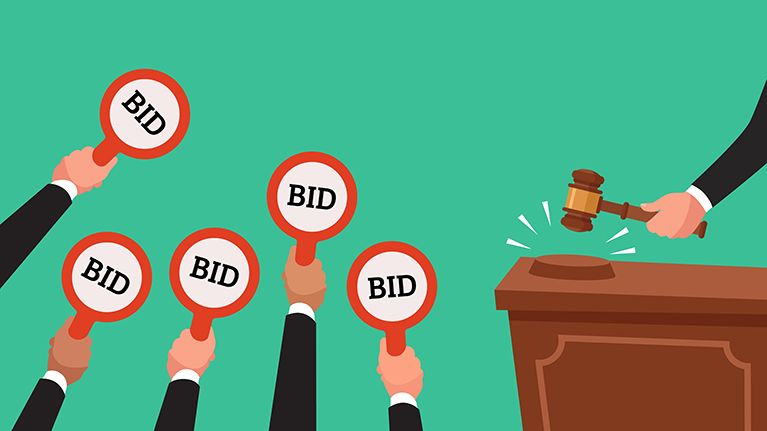
What is the Bid Price?
In any given market, the bid price is the highest price the market is willing to pay for that trading instrument. If there are several buyers, all willing to pay a different price, the highest of those prices will show as the bid.
The bid price is the highest price at which a seller can sell a trading instrument at any given time.
What is the Ask Price?
The ask price is the lowest price at which the market is willing to sell a given trading instrument. The ask price is also known as the offer price. If there are several sellers with limit orders in the market, the order with the lowest price will show as the market’s ask price.
The ask price is the lowest price at which a buyer can buy a trading instrument at any given time.
What's the difference between the bid and ask price?
The following is an example of a Forex quote:
GBPUSD: 1.27256/1.27272
In this example, the first price mentioned is the bid price, which will always be the lower of the two prices in a quote. As a seller, this will be the price at which you will be able to sell GBP for USD.
The second price in the example is the ask price, which is also the higher of the two prices. If you are a buyer, this is the lowest price at which you can buy GBP for USD.
Bid and ask prices both show limit orders in the market. A market order would be immediately executed at the best bid or ask price.
On a trading platform, you may sometime sell prices as shown below, which can cause some confusion:
| Sell | Buy | |
| GBPUSD | 1.27256 | 1.27272 |
In this case, the bid price is labelled ‘Sell’ and the ask price is labelled ‘Buy’ because these are the prices you can sell and buy at.
Quote Driven versus Order Driven Markets
To properly understand where bid and ask prices come from, you need to understand the two types of markets; quote driven markets and order driven markets.

Quote Driven Markets
A quote driven market is run by a market maker or broker. Their job is to maintain an orderly market by continuously quoting a bid and ask price for each instrument they make a market for.
Order Driven Markets
An order driven market is entirely made up of buy and sell orders from market participants. There is no middleman, but all orders are processed by a broker who charges commission. Most stock markets are order driven.
Not financial advice. The content of this article is provided by Libertex for general information and educational purposes only. It does not constitute investment advice, investment research, a personal recommendation, or an offer or solicitation to buy or sell any financial instrument or other asset. It is general in nature and is not tailored to any individual reader, so it cannot account for your personal circumstances, financial situation, knowledge, experience, or investment objectives. Any decision to act on this content is taken at your own discretion and risk, and you remain solely responsible for assessing whether a product or strategy is right for you and for seeking independent professional advice where appropriate.
Risk warning. Trading in financial instruments and other assets, particularly leveraged products such as CFDs, is complex and carries a high risk of losing money rapidly. Leverage magnifies both gains and losses, so small market movements can lead to disproportionate losses. The value of the assets referenced may rise or fall, and you may lose your entire invested amount. Past performance is not a reliable indicator of future results. The use of artificial intelligence, algorithms, automated strategies, or any other analytical tool in trading does not guarantee any particular outcome, does not eliminate risk, and does not replace your own judgement — you remain fully responsible for assessing every instrument, strategy, and decision, and for the results of your trading.
Why trade with Libertex?
- Get access to a demo account free of charge
- Receive live technical assistance 5 days a week, 24 hours a day
- Enjoy leverage of up to 1:500
- Use a platform for any device: Libertex and MetaTrader 4 and 5
- Pay zero commission on withdrawals in Latin America
- Benefit from up to $500 protection on your first trades with Negative Trade Protection